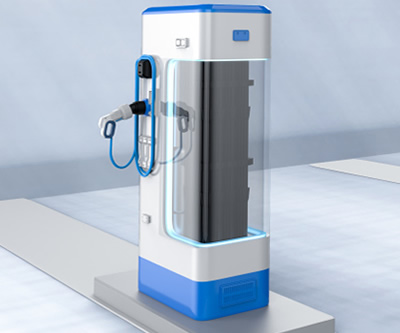
Vertical charging station for 15 days
-
5.00
Hours
-
1200.00
Rent
-
29938
Stock
-
5
Quota
Vertical charging station is a common electric vehicle charging device, usually installed vertically on the ground in the form of a column, widely used in public parking lots, commercial areas, highway service areas and other places. The following is a detailed introduction to vertical charging stations:
1. Basic structure
Column design: The main body is a vertical column structure, which saves space and facilitates vehicle parking.
Charging interface: equipped with a charging gun that complies with national standards (such as GB/T), supporting AC or DC charging.
Operation interface: equipped with a display screen, card swiping/scanning area, operation buttons, etc., some support voice interaction.
Protective shell: Made of waterproof, dustproof, and corrosion-resistant materials (IP54 or higher protection level), suitable for outdoor environments.
2. Main types
Communication slow charging pile (AC pile)
Power: 7kW, 22kW, etc., suitable for long-term parking scenarios (such as residential areas, office areas).
Charging time: 6-10 hours (depending on battery capacity).
Features: Low cost, low load on the power grid, suitable for nighttime charging.
DC fast charging pile (DC pile)
Power: 60kW, 120kW, 180kW or even higher.
Charging time: It takes 30 minutes to charge up to 80% of the battery (compatible with high-voltage platforms).
Features: Fast power supply, suitable for highway service areas, commercial centers, etc.
3. Core features and advantages
High power output: DC fast charging piles can significantly shorten charging time and enhance user experience.
Strong compatibility: Supports multiple brands of electric vehicles (must comply with national standard protocols such as CCS, CHAdeMO, etc.).
Intelligent management:
Networking functions: remote monitoring, fault diagnosis, OTA upgrade.
Payment methods: Supports scanning codes, swiping cards, app payments, etc.
Reservation charging: Set the low electricity price period for charging through the APP to save costs.
High safety: equipped with overvoltage, overcurrent, leakage protection, and charging self-test functions.
Modular design: convenient for later maintenance and power expansion.
4. Typical application scenarios
Public parking lot: supporting charging facilities for shopping malls, office buildings, hospitals, and other places.
Highway service area: meets the fast power supply needs for long-distance travel.
Residential community: solving the problem of charging private electric vehicles at night.
Commercial Complex: Attracting foot traffic as a value-added service.
Dedicated fleet: such as dedicated charging stations for buses, logistics vehicles, etc.
5. Installation and maintenance
Installation conditions: It needs to be connected to the power grid (DC piles require dedicated transformers), and the ground must be hardened and fixed.
Space requirement: A single pile covers an area of approximately 0.5-1 square meters and requires reserved parking space for vehicles.
Maintenance cycle: Regularly inspect cables, cooling systems, software upgrades, etc., with a low failure rate.
6. Development Trends
Ultra fast charging technology: Upgrade to 800V high-voltage platform and power above 480kW (such as Tesla V4 overcharging).
Integrated photovoltaic energy storage and charging: Combining photovoltaic power generation and energy storage systems to achieve green energy charging.
V2G (Vehicle to Grid Interaction): Electric vehicles supply power to the grid in reverse and participate in power peak shaving.
Smart city support: Integrate with smart transportation systems to optimize the layout and management of charging stations.